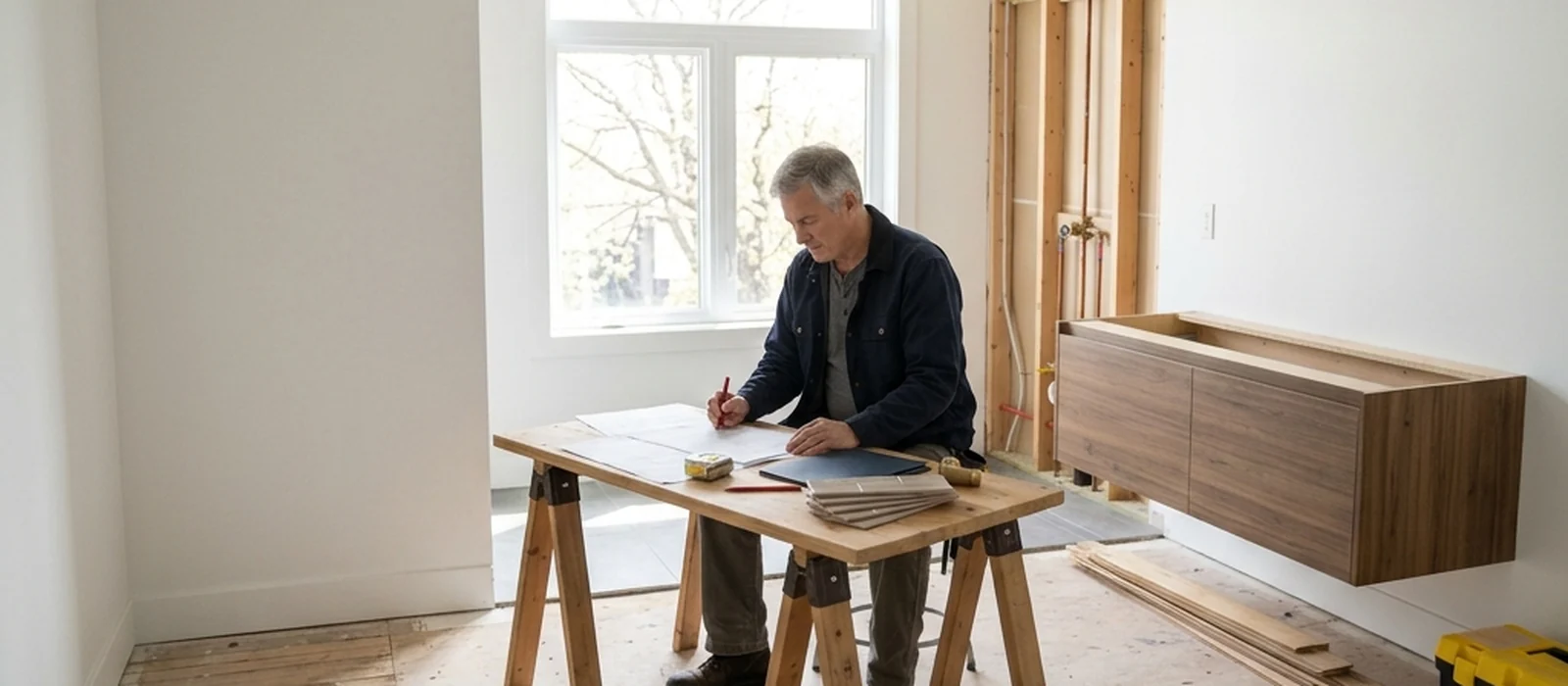
A bathroom can look simple on a finish schedule and still cross three approval systems. Keep a vanity where it is and the job may be cosmetic. Move its drain, add a heated floor, or open a shared wall in a condo, and the same room may involve municipal trade permits plus written strata approval.
That scope difference is the useful answer to the question, "Do I need a permit for bathroom renovation?" It is also why a contractor should settle the layout and services before demolition, not after the walls are open. DELANA Interiors has handled full residential renovation work across Metro Vancouver since 1981. This guide separates what the official sources say from what must still be confirmed for a particular property.
When Is a Permit for Bathroom Renovation Required in BC?
Not every bathroom renovation needs a permit. In Vancouver, cosmetic finishes and same-location fixture replacement are generally exempt when the work does not include another permit-triggering change. Relocated plumbing, new electrical work, altered walls, or structural work changes the answer. The municipality, building type, and final scope control the decision.
The City of Vancouver's permit guide lists fixture, cabinet, and flooring replacement among projects that do not need a permit, provided no other regulated work is included. Use the table below as a planning screen, then confirm the final scope with the applicable authority.
| Proposed work | Vancouver | West Vancouver | Strata layer |
|---|---|---|---|
| Paint, tile, flooring, or cabinets only | Generally no permit | Confirm with District | Check bylaws and work rules |
| Replace vanity or fixture in the same location | Plumbing permit not normally required | Confirm with District | Approval may still apply |
| Move sink, toilet, tub, or shower | Plumbing permit required | Mechanical/plumbing path | Likely if common property is affected |
| Add heated floor, circuit, or receptacle | Electrical permit required beyond exemptions | Electrical permit path | Capacity and approval may apply |
| Move walls or alter shared pipes/structure | Building and trade permits may apply | Building and trade permits may apply | Written approval normally required |
Does Installing a New Vanity Require a Permit in Vancouver?
A like-for-like vanity replacement in the same location does not normally require a Vancouver plumbing permit. The City's plumbing permit guidance exempts repair or replacement of fixtures that stay in the same location.
The answer changes when the new vanity forces the drain or water supplies to move. A wider cabinet can look like a simple upgrade on paper, but an off-centre sink may require the plumber to reroute services inside the wall. Add a new receptacle, move a light, or install an electric heated floor and the electrical scope must be assessed separately.
The cabinet does not decide the permit. The work hidden behind it does.
What Bathroom Renovations Require a Permit in Vancouver?
Bathroom work usually enters the permit system when it changes plumbing, electrical services, walls, structure, or life-safety assemblies. One project can need more than one permit because each trade has a separate approval path.
Plumbing
Moving or adding drains, water lines, toilets, sinks, tubs, or showers.
Electrical
New circuits, heated floors, receptacles, fans, or relocated wiring beyond listed exemptions.
Building
New or moved partitions, structural changes, and work affecting regulated assemblies.
The City requires electrical permits for regulated electrical work beyond its narrow like-for-like exceptions. Its electrical permit page also explains who may apply. Plumbing permits follow their own applicant rules.
Waterproofing needs a more careful answer. A sound membrane system is essential behind tile in a wet area, but waterproofing by itself is not listed as a universal permit trigger in the municipal guidance. Check the complete scope instead: plumbing, electrical, walls, and structure are the changes that determine the approval path.
How Do Vancouver and West Vancouver Bathroom Permit Rules Differ?
Vancouver and West Vancouver are separate permit authorities. City exemptions, fees, application forms, and processing targets should never be applied automatically to a District of West Vancouver property.
| Published item | City of Vancouver | District of West Vancouver |
|---|---|---|
| Same-location fixture guidance | Explicit plumbing exemption | No matching explicit exemption found; confirm |
| Simple plumbing processing target | Next business day without plan review | No universal target published in reviewed source |
| Simple electrical target | Five business days | Confirm for project |
| Published minimum trade fee | Scope-dependent; check current fee schedule | $150 plumbing up to four fixtures; typical $150 electrical minimum |
| Starting before issuance | Can mean doubled fees and stopped work | Plumbing and electrical fees double |
For eligible simple renovations under $250,000, Vancouver's Residential Renovation Fast Track targets one week. Work already started without a permit is not eligible. In West Vancouver, use the District's current regulations and fee schedule; its 2026 plumbing fee is $150 for up to four fixtures and $31 for each additional fixture.
When the West Vancouver scope is unclear, the District's permits department lists 604-925-7040 for project-specific questions. Describe the building type and every plumbing, electrical, ventilation, wall, and structural change. Asking only whether a "bathroom renovation" needs a permit leaves out the details that decide the answer.
Free download: Vancouver Bathroom Renovation Permit Checklist. Use the printable PDF to mark plumbing, electrical, building, strata, application, inspection, and close-out responsibilities before signing a contract.
What Changes for a Bathroom Renovation in a Strata Property?
A municipal permit and strata approval answer different questions. A cosmetic change may be exempt at City Hall but still restricted by the strata's bylaws, renovation rules, working hours, insurance requirements, or protection of common property.
BC's Standard Bylaws require written approval for alterations involving structure, common property, limited common property, or components the strata must insure. A strata may also require a written agreement making the owner responsible for expenses connected with the alteration.
Before demolition, ask the council what it requires. A practical submission may include the scope, drawings, contractor information, insurance, schedule, access plan, and the municipal permit record where applicable. That is useful preparation, not a universal legal checklist. The Province's explanation of common and limited common property is a good starting point.
Did the checker flag more than one approval path? A Vancouver general contractor can coordinate the scope across the municipality, qualified trades, and strata before demolition. Ask DELANA to review your bathroom plan.
What Does DELANA's Real Bathroom Work Look Like in West Vancouver?
These are named DELANA projects with confirmed years or clearly labelled undated work. They are not stock photographs with "West Vancouver" added to the caption. Permit records are separate property documents, so the examples below focus on what DELANA can verify directly: scope coordination, waterproofing, fixtures, finish work, and real project photographs.
Featured project | 2020-2021 | 1588 Pinecrest Drive
Full Home Renovation: Primary Ensuite and Powder Bath
The Pinecrest work included the exterior, kitchen, bedrooms, and bathrooms. In the primary ensuite, a freestanding soaker tub sits against full-height tile beside a curbless walk-in shower. The powder bath uses a black vessel sink, live-edge vanity, matte-black and brass fixtures, and feature lighting. Both rooms were rebuilt from the substrate up with Schluter KERDI waterproofing before tile was set.
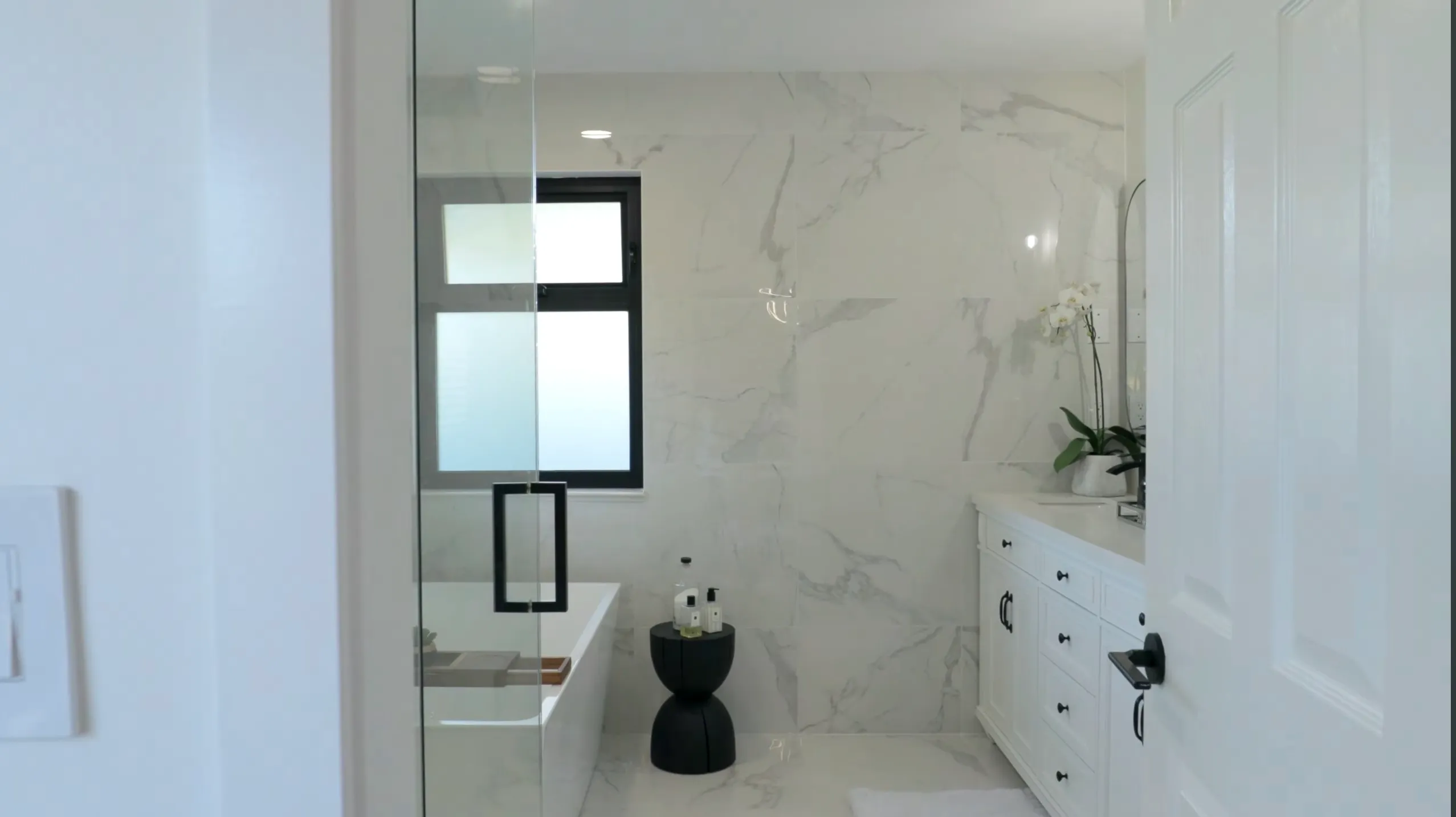
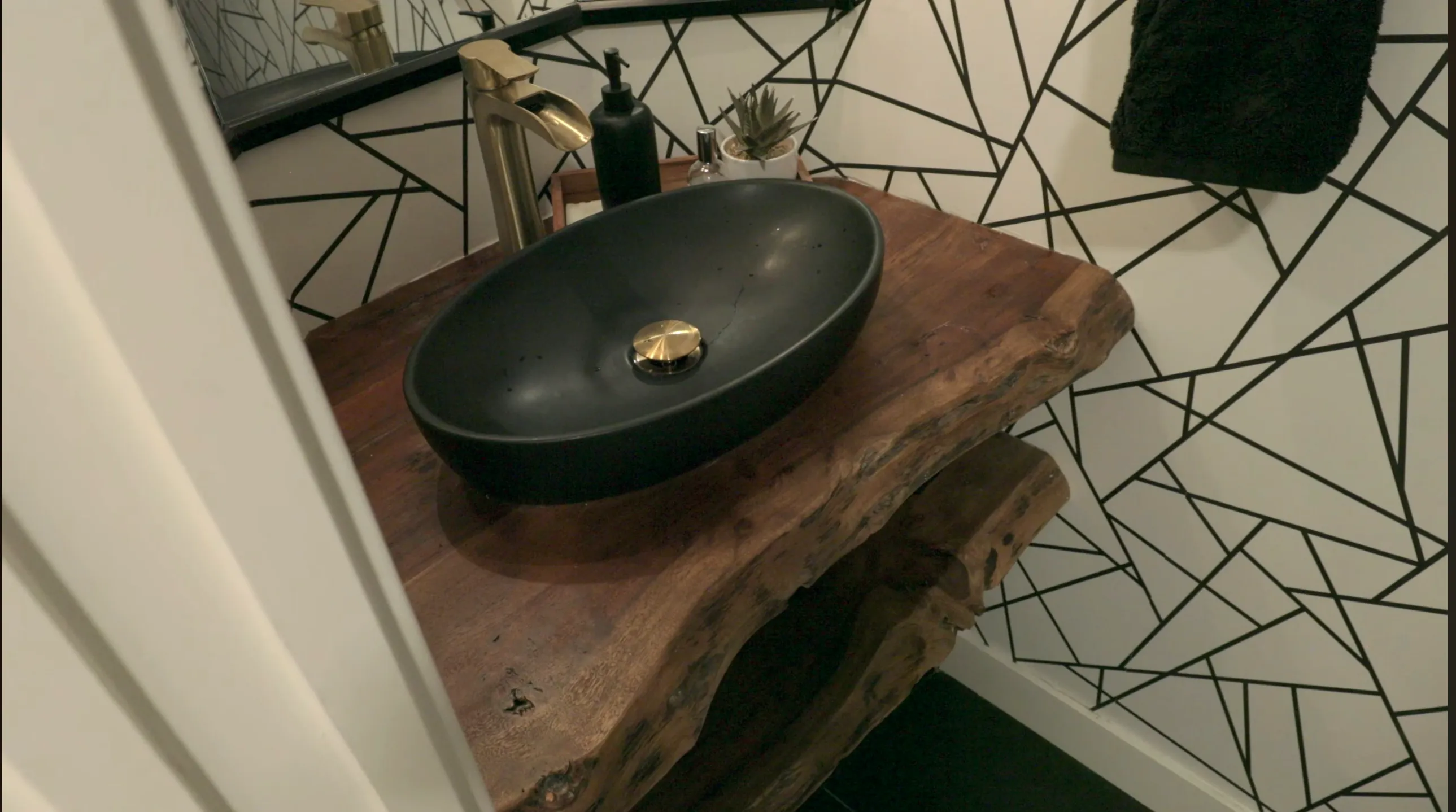
| Project | Project type | Confirmed bathroom scope | Visual proof | Planning lesson |
|---|---|---|---|---|
| 1588 Pinecrest Drive 2020-2021 | Full home renovation | Primary ensuite and powder bath rebuilt from substrate up | Two verified bathroom photographs | Set the wet-area and fixture scope before finishes are ordered |
| 1561 Inglewood Avenue 1993 | Custom build; Western Living Home of the Year | Primary ensuite, secondary ensuites, powder room, bespoke millwork, marble and granite | Project archive; no bathroom-specific image used here | Coordinate several bathrooms under one documented design and trade plan |
| 1276 Haywood Avenue Year not published | Complete renovation and exterior work | Bathrooms rebuilt with KERDI waterproofing, large-format porcelain, custom vanity, quartz, and layered lighting | Text-only proof; no bathroom image used | Resolve walls, services, waterproofing, and millwork as one scope |
See the full West Vancouver bathroom renovation portfolio, review the broader bathroom renovation Vancouver service, or compare scope against the Vancouver bathroom renovation cost guide.
How Do You Apply, Pass Inspections, and Close a Bathroom Permit?
Start by freezing the bathroom layout and listing every trade change. That gives the municipality enough scope to identify the application path and stops the contract from treating permits as an undefined allowance.
- Define the scope. Mark every fixture, drain, supply, circuit, fan, wall, and shared assembly that will change.
- Confirm the authority. Use City of Vancouver or District of West Vancouver guidance for the property address, then check strata rules separately.
- Name the applicant. Plumbing, electrical, and building permits can have different eligibility rules.
- Submit before demolition. Starting early can remove fast-track eligibility, double fees, or stop the work.
- Plan inspections. Ask which work must remain exposed and who books each inspection.
- Keep the close-out record. Collect inspection results and final approvals with the project documents.
The exact inspection sequence depends on the approved scope. Use the City's residential renovation process to identify the required inspections for the issued permits. A good contract should name who books them, who keeps work accessible, who pays for revisions or re-inspections, and who supplies the final record.
What Should the Contract Say About Permits?
Avoid a one-line allowance that says "permits by owner" without explaining what that means. The contract should identify each expected approval, the person responsible for the application, and the documents that person must prepare. It should also say whether permit fees are included in the contract price or billed at cost.
Inspection responsibility matters just as much. If a wall is closed before an inspector sees the regulated work, reopening it costs time and money. The contract should name who books the inspection, who confirms the date with the trades, and who decides that the work may be covered. It should also assign revision and re-inspection charges when a drawing changes or work does not pass.
For strata work, attach the council's written approval and any alteration agreement to the project record. The contractor should receive the approved work hours, access rules, elevator bookings, and common-area protection requirements before scheduling demolition. Municipal approval does not cancel those building rules.
Vancouver warns that unpermitted work can lead to doubled fees, stopped work, removal of completed construction, unexpected code upgrades, and trouble during a sale or insurance claim. The homeowner remains responsible for fees and penalties even when a contractor said no permit was needed. That is a strong reason to put the permit decision in writing before work begins.
Frequently Asked Questions About Bathroom Renovation Permits in Vancouver
Do I need permission to install a new bathroom?
In Vancouver, a new bathroom normally adds plumbing and electrical services and may change walls, ventilation, or structure. Confirm the building and trade permits with the City before construction, plus strata approval where applicable.
Can I renovate my bathroom by myself?
You can complete some cosmetic work yourself. Regulated plumbing and electrical work has applicant and qualification rules, so confirm who may pull each permit before assigning the work.
Can you install a toilet where there is no plumbing?
A toilet needs an approved drain, vent, and water supply. Adding those services requires plumbing review and may affect floors, structure, or shared piping.
Is a building permit required to add a bathroom?
Often, but the exact permits depend on the room and the changes. A new bathroom usually needs trade permits; a building permit may also be required for walls, structure, ventilation, or other regulated work.
Do you need a permit to change a light fixture in Vancouver?
The City's electrical permit guidance lists narrow like-for-like exemptions, but new wiring, a relocated fixture, or a new circuit changes the scope. Confirm who may complete the work before it starts.
Does bathroom waterproofing require a permit?
Municipal guidance does not list waterproofing by itself as a universal permit trigger. The plumbing, electrical, wall, structural, and strata work around it may trigger approvals, so assess the complete scope.
How can I check whether an older bathroom renovation was permitted?
Use the municipality's permit records or start with Vancouver's permit information service, then ask for the final inspection status, not only an application number. For a strata home, review council approvals and alteration agreements as well.

Written by
Jim Lazos
Jim Lazos is the founder of DELANA Interiors and has built and renovated homes across Metro Vancouver since 1981. His work includes the Western Living Home of the Year at 1561 Inglewood Avenue and full residential renovations throughout West Vancouver.
Plan the scope before demolition
Talk Through Your Bathroom Renovation With DELANA
When you are ready, DELANA can review the layout, flag likely permit and strata paths, and prepare a clear project scope. We serve Vancouver, West Vancouver, and the North Shore.
DELANA Interiors | Vancouver, West Vancouver, and the North Shore | Request a free in-home consultation